Pet Poison Prevention Month: Protecting Curious Noses and Paws
Mar 11, 2026
Pet Poison Prevention Month: Protecting Curious Noses and Paws
March is Pet Poison Prevention Month, a timely reminder that many common household items can pose serious risks to dogs and cats. Our pets experience the world largely through their sense of smell, and something that catches their interest may be dangerous if ingested.
The good news is that most toxic exposures are preventable. And when accidents do happen, early action makes a significant difference.
Why Poisoning Happens So Often
Most pet poisonings are not dramatic events involving rare chemicals. They happen during normal daily life.
A dropped piece of chocolate.
A bouquet of lilies on the counter.
A sugar-free gum left in a purse.
A medication bottle knocked off a nightstand.
Dogs are opportunistic eaters. Cats are curious and sensitive to substances that may seem harmless to us. Many toxins are accessible, appealing, and unfortunately potent in small amounts.
Understanding common risks is the first step in prevention.
The Most Common Household Toxins
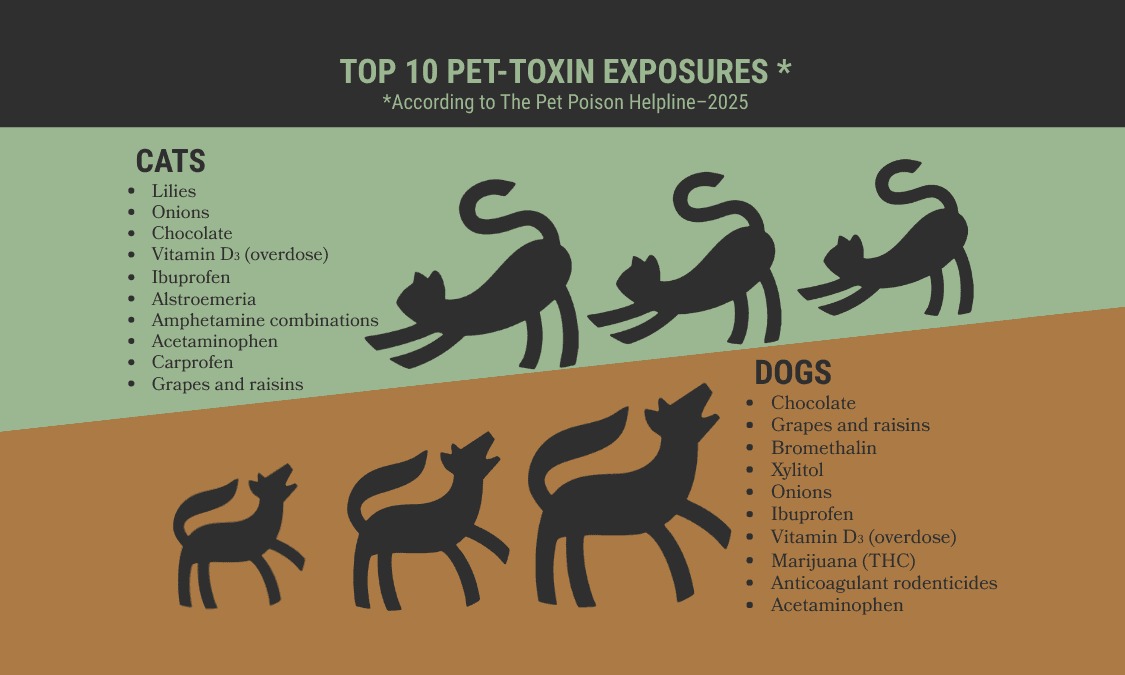
Chocolate
Chocolate contains theobromine and caffeine, which dogs metabolize slowly. Dark chocolate and baking chocolate are especially dangerous. Signs may include vomiting, restlessness, rapid heart rate, tremors, or seizures.
Xylitol (Sugar-Free Products)
Xylitol is found in many sugar-free gums, candies, baked goods, and even some peanut butters. In dogs, it can cause a rapid drop in blood sugar and, in some cases, acute liver failure. Even small amounts can be dangerous.
Lilies (Cats)
True lilies—including Easter lilies, tiger lilies, and Asiatic lilies—are highly toxic to cats. Even small exposures, such as licking pollen or drinking vase water, can cause acute kidney failure. This is a medical emergency.
Human Medications
Over-the-counter pain relievers, antidepressants, ADHD medications, and heart medications are among the most common causes of serious toxicity. Cats are particularly sensitive to certain medications, including acetaminophen.
Rodenticides and Insecticides
Rat poison and certain insect control products can cause internal bleeding, neurologic signs, or organ failure, depending on the type. Newer products may not cause immediate symptoms, which makes early intervention even more important.
Household Plants and Foods
Grapes, raisins, onions, garlic, macadamia nuts, and certain houseplants can all cause toxicity. Not all pets react the same way, which is why any questionable ingestion should be taken seriously.
Early Signs of Poisoning
Symptoms vary depending on the toxin involved, but common warning signs include:
Vomiting or diarrhea
Excessive drooling
Lethargy or weakness
Tremors or seizures
Difficulty breathing
Pale gums
Changes in behavior
Sometimes, signs are subtle at first. A pet who simply seems “off” after a known exposure should be evaluated.
Why Timing Matters
In toxicology, time is critical.
Many toxins are most effectively treated within the first few hours after ingestion. Early evaluation may allow:
Induction of vomiting (when appropriate)
Administration of activated charcoal
Baseline bloodwork to assess organ function
Targeted supportive care
Waiting for symptoms to appear can limit options. If you suspect your pet has ingested something potentially harmful, it is always safer to call.
What To Do If You Suspect a Toxic Exposure
Stay calm.
Remove your pet from the source.
Do not induce vomiting unless directed by a veterinarian.
Call your veterinarian or an emergency facility immediately.
If possible, have the product packaging available. Knowing the exact substance, amount, and time of exposure helps guide treatment.
You may also contact a pet poison hotline for guidance, but veterinary evaluation is often still necessary.
Prevention: Small Changes, Big Protection
Poison prevention is often about simple habits:
Store medications in closed cabinets, not on counters.
Keep purses and bags out of reach.
Avoid bringing lilies into homes with cats.
Check ingredient labels for xylitol.
Secure trash cans with lids.
Store rodenticides and chemicals in locked areas.
Seasonal awareness also matters. Holidays bring chocolate, decorations, and new plants into the home. Warmer months increase exposure to fertilizers and outdoor chemicals.
A Partnership in Safety
At EPIC, we frequently care for pets after accidental ingestions. Some cases are mild and easily treated. Others require hospitalization and intensive monitoring. The difference is often how quickly intervention begins.
Pet Poison Prevention Month is not about fear—it’s about awareness. Most exposures are preventable, and most pets recover fully when treated promptly.
If you have questions about a product in your home, or if you suspect your pet has ingested something concerning, we are here to help guide you through the next steps.
Curiosity is part of what makes pets wonderful companions. A little prevention helps keep that curiosity safe.